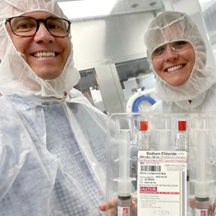
Drug shortages are often framed as a supply chain issue, but for children’s hospitals they can quickly become an obstacle to providing vital patient care.
A delay in manufacturing led to an international shortage of ifosfamide, a cancer drug, in recent months. Thanks to strong partnerships, collaboration, and data that tells the deeper story, the Children’s Hospital Association (CHA) was able to successfully advocate for children’s hospitals.
Why the shortage matters to children’s hospitals
Ifosfamide is a vital oncology drug that is used to treat several cancers that occur in children, such as lymphoma and sarcoma. There are fewer approved treatment options available to pediatric oncology patients than for adults, leading to significantly more reliance on ifosfamide for pediatric care.
Ifosfamide usage is also less predictable at children’s hospitals. Children’s usage varies widely by age, size, and diagnosis. A large 15-year-old and a small 6-year-old have vastly different dosage needs, making it more challenging for children’s hospitals to predict future usage and plan effectively.
Pediatric oncology patients rely on timely care. Delaying treatment by even a day or two does not follow protocol and may have a negative effect.
How partnerships protected kids
CHA recognized the need for a strong voice to speak on behalf of children’s hospitals while allocation decisions were being made. The idea was simple: Children represent a disproportionately large share of need for ifosfamide, and that reality should be reflected in shortage mitigation efforts.
Utilizing data from CHA’s Pediatric Health Information System (PHIS®) and member purchasing data from Vizient, a health care performance improvement company, to show the importance of the drug to children facing cancer treatment, CHA approached the Food and Drug Administration and ifosfamide suppliers to advocate for pediatric patient supply. Because of this collaboration and Vizient’s Novaplus Enhanced Supply Reserve program, a dedicated supply of ifosfamide was managed to support children’s hospitals and other organizations with significant pediatric needs.
CHA and Vizient also combined PHIS and Vizient data to identify the pediatric hospitals with the greatest need and help prioritize access to available supply.
Many of the children’s hospitals engaged with the CHA Pharmacy Services work connected often during the shortage to collaborate. Pediatric and adult hospitals aided children’s hospitals with critical supply needs to support patient treatment schedules.
A healthy supply of ifosfamide is anticipated in the last quarter of 2026.
As drug shortages persist at historically high levels, CHA will continue to work with partners and children’s hospitals to put children first.