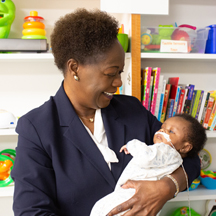
More than 35 years ago, I experienced health care not as a leader, but as a young patient.
Like many families at the time, mine never stepped inside a children's hospital. Not because one didn't exist, but because no one had clearly explained why it mattered.
Today, that absence of understanding feels profound.
Because once you've experienced care designed specifically for children — for their fears, voices, and families — you realize something fundamental: children are not simply small adults. Systems built for adults, no matter how clinically excellent, cannot fully meet a child's needs.
That realization is where the story of pediatric health care begins. It also offers lessons far beyond medicine.
From designing experiences around people to building trust, integrating care, and innovating with purpose, pediatric hospitals demonstrate what health care can achieve when people are truly placed at the center.
Built for children, on purpose
When you walk into a pediatric hospital, you feel the difference immediately. Every detail is intentional: the language, the environment, the way clinicians meet children at eye level and engage families as partners.
In pediatrics, the patient is never just the child. It's the child and the family.
Caring for patients who range from premature infants to young adults requires flexibility, empathy, and a willingness to meet people where they are. Pediatric care succeeds when it adapts, listens, and turns small moments into meaningful ones.
The lesson extends beyond health care: when you design care for the person, not just the problem, outcomes improve.
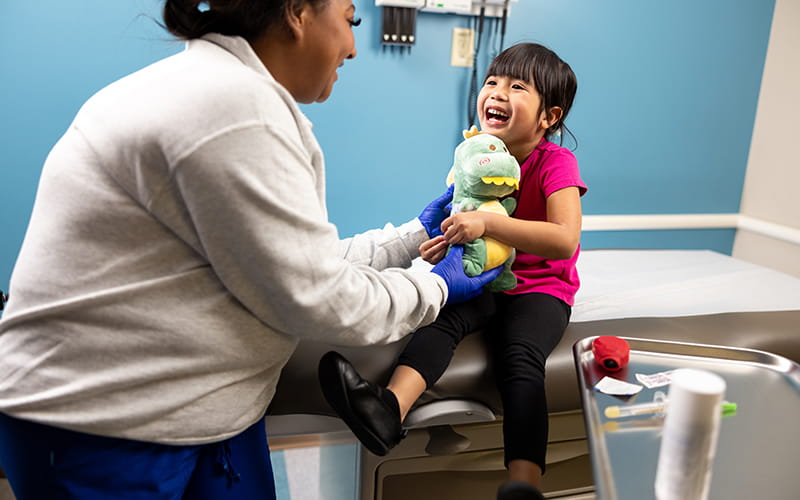
The power of independence
Children represent roughly a quarter of the population, yet their needs are often underprioritized in systems designed for adults.
As one of a small number of freestanding children's hospitals in the country, Children’s Nebraska can make decisions based solely on what's best for kids. We aren't balancing pediatric priorities against adult populations. Children are the priority.
That clarity allows us to invest differently, move faster, and think more broadly about our responsibility — not just to patients inside our walls, but to families across communities and rural regions who rely on us for care, expertise, and hope.
Organizations that are clear about who they serve tend to be more decisive, innovative, and impactful.
Whole child, whole family
For too long, health care has treated physical health and mental health as separate issues.
Pediatric care challenges that assumption every day. A child living with a chronic condition needs more than medical treatment. They need emotional support, stability, and continuity of care. Their family does too.
The future of pediatric health care isn't simply about expanding services. It's about integrating them. When physical and behavioral health are treated as one continuum, we improve outcomes not only for children today, but for the adults they will become.
Listening as a strategic skill
One of the most valuable sources of insight in pediatric care isn't a test result — it's a parent.
Families see what we can't. They notice subtle changes and provide context no chart can capture. When we listen and treat families as partners, trust deepens and care improves. Health care becomes a collaboration.
In any industry, listening is often described as a soft skill. In reality, it's a strategic advantage. Organizations that listen best learn fastest and serve most effectively.
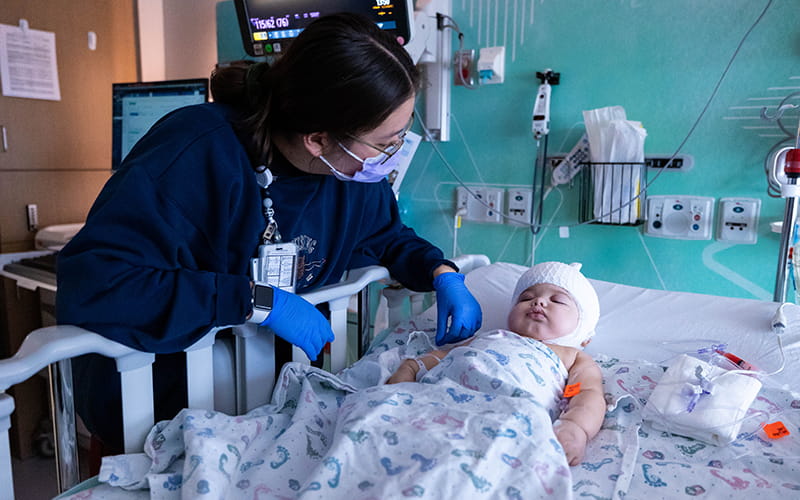
A safety net and an advocate
Children's hospitals serve as a safety net for families facing complex diagnoses, limited resources, or uncertain futures.
We care for children regardless of their background, location, or ability to pay because access is foundational to our mission. That commitment comes with challenges, but it also comes with responsibility.
Children cannot advocate for themselves. We must do it for them.
For leaders in any field, that raises an important question: Who are you advocating for that cannot advocate for themselves?
Innovation that expands access
Innovation in pediatric health care isn't just about technology. It's about closing gaps. Telehealth, AI, advanced diagnostics, and provider education all help bring specialized care closer to home and create greater consistency across communities.
The goal isn't simply faster care for some. It's better care for more people.
True innovation asks: How do we make our best solutions accessible to those who need them most?
Trust and purpose drive impact
Trust and purpose are inseparable in pediatric health care. Trust is built through consistency, transparency, and follow-through. Purpose is what draws people to this work and sustains them through its challenges.
Together, they create the foundation for culture, performance, and meaningful change. They shape how teams care for one another and how organizations serve those who depend on them. When organizations invest in both, they create something more durable than strategy: belief.
Looking ahead
The future of pediatric health care won't be defined by our ability to predict what's next. It will be defined by our ability to adapt, remain focused on people, and build systems that are responsive, inclusive, and grounded in purpose.
Ultimately, the measure of our work is simple: Did we improve the life of a child — not just today, but for a lifetime?
If we can answer yes, we're doing more than shaping health care. We're helping shape the future.